17th Biennial Conference on the Biology of Marine Mammals, Society for Marine Mammalogy, Cape Town, Nov/Dec 2007


Ketos Ecology will be presenting a poster at the Society for Marine Mammalogy conference in Cape Town at the end of 2007. The poster is entitled 'Morphology of common dolphins (Delphinus spp.) photographed off Angola', and describes the external appearance (shape and pigmentation pattern) of common dolphins in Angolan waters with discussion on whether these animals most similarly represent the short-beaked (Delphinus delphis) or the long-beaked (D. capensis) species.    The conference poster is available to download here (right).  The poster abstract is presented below.


Download the poster here


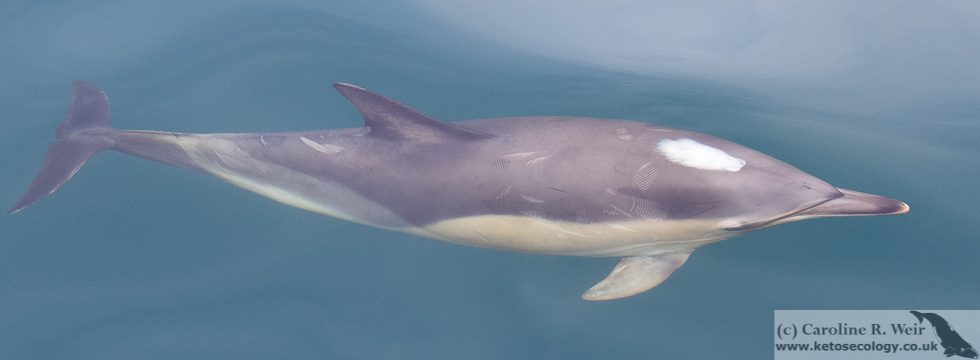
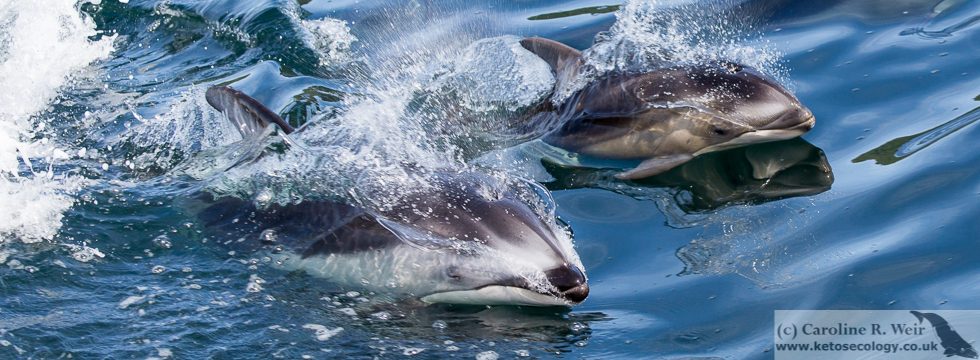
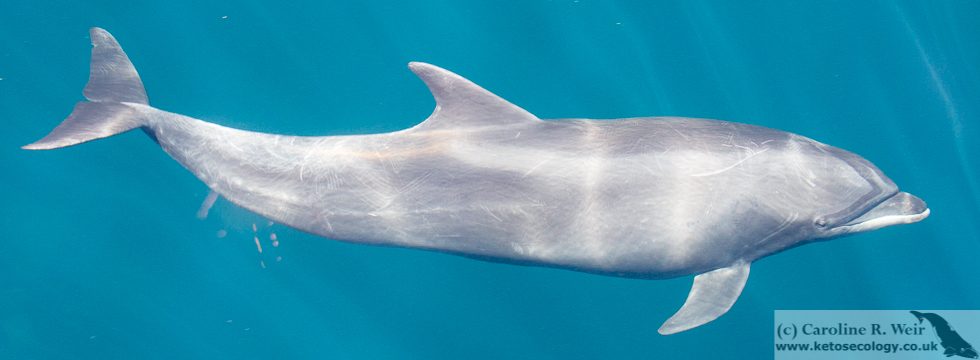
LEFT: Common dolphins (Delphinus sp.) photographed off Angola, West Africa, showing variation in external appearance


Morphology of common dolphins (Delphinus spp.) photographed off Angola


Caroline R. Weir1,2 and Phil Coles3


(1) Ketos Ecology, 44 Lord Hay’s Grove, Old Aberdeen, Aberdeen AB24 1WS, United Kingdom; (2) Department of Zoology, School of Biological Sciences, University of Aberdeen, Tillydrone Avenue, Aberdeen, AB24 2TZ, United Kingdom; (3) 55a Crescent Road, Ramsgate, Kent, CT11 9QX, United Kingdom


Common dolphins exhibit considerable geographic variation in morphology, with two species, the short-beaked Delphinus delphis and the long-beaked D. capensis common dolphin, currently recognised. We examined images of unidentified Delphinus off Angola, with the aim of determining whether their morphology was consistent with D. delphis or D. capensis.


4705.4 hr of survey data were collected during three seismic surveys off northern Angola between August 2004 and May 2007. Standardised effort and sighting forms were completed and animals were photographed in the field when possible. Images were reviewed, and the features of adult animals compared with previous descriptions for D. delphis and D. capensis. Twenty-four Delphinus sightings (1,347 animals) were recorded, with 19 further records (2,165 animals) reported anecdotally. Images were taken during three encounters from shelf waters (70–180 m) and three from deep water (1,800–2,000 m).


Most adult Delphinus exhibited capensis-type morphology, including a narrow ochre-coloured thoracic patch, a conspicuous and moderately formed flipper–anus stripe, a flipper stripe that angled towards the gape and fused with the lip patch <1/3 along the gape, and slender body shape. However, these animals had variable melon shape and only moderate-length rostrums. A few individuals exhibited a sharper and brighter thoracic patch, narrower flipper-anus and flipper stripes, heavier body shape, more rounded melon and a thicker rostrum. These individuals were photographed within the same school as capensis-type animals.


None of the Delphinus photographed off Angola were clearly assignable to D. delphis or D. capensis. Most animals exhibited colouration similar to D. capensis, but with a more rounded melon and shorter rostrum. A few animals bore most similarity to D. delphis. Clarifying the taxonomy and species status of Delphinus off West Africa is required for their effective conservation and management, particularly given unquantified impacts from fisheries bycatch.


Ketos Ecology © 2007